




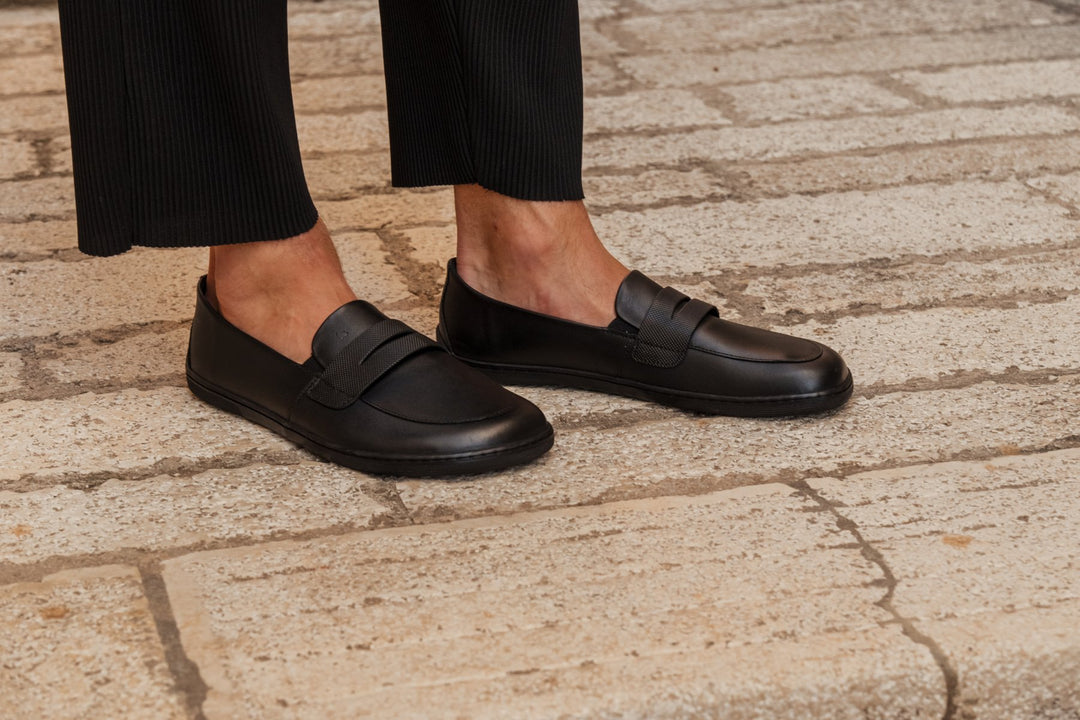


If you have flat feet, barefoot shoes can offer more natural space, flexibility, and freedom of movement than conventional footwear. The key is choosing a pair that fits your foot shape well: enough room for the toes, a secure hold around the heel and instep, and the right amount of space through the midfoot.
This guide will cover:
- what to look for in barefoot shoes for flat feet
- which brands are worth considering
- which models may suit flat feet best
Our Background with Barefoot Footwear
Martina works with barefoot shoes every day in our Sydney store and regularly helps customers find the right fit across different brands and models. She sees how shoe shape, width, volume, heel fit, and overall comfort can vary from one pair to another.
Quick Disclaimer: We are not doctors, podiatrists, or physiotherapists. This guide is based on our experience with barefoot footwear and fitting. If you have painful, rigid, injured, or medically complicated flat feet, it is best to speak with a qualified health professional.
Our Top Selection

Koel Barefoot Ila / Ilo
Secure everyday sneakers with a casual barefoot fit.


Xero Prio
Athletic barefoot shoe for walking and gym use.
Read more below about why we recommend these shoes.
When Barefoot Shoes Make Sense for Flat Feet
Barefoot shoes may make sense if:
- your flat feet are flexible and not painful
- your toes feel cramped in regular shoes
- you want more room for natural toe splay
- you prefer a shoe that lets your foot move instead of holding it rigidly
- your current shoes feel too narrow, stiff, or restrictive
- you are ready to transition gradually
Barefoot shoes may not be the best first option if:
- your flat feet are painful, rigid, or recently developed
- you currently rely on strong arch support for daily comfort
- you have diabetes-related foot issues, arthritis, injury, or instability
- very thin or flexible shoes feel uncomfortable right away
- you are not prepared for a slow transition period
Did you know flat feet are incredibly common? Most sources state that anywhere from 20-30% of people have flat feet (1). Although most people think having flat feet means they're doomed to wear restrictive orthotics for the rest of their lives, this isn't necessarily the case. People with flat feet can very often have great results from wearing minimalist shoes.
Are Barefoot Shoes Appropriate for Flat Feet?
The Potential Positive Effects
Although the most common prescription for flat feet is stiff orthotics, this approach statistically hasn't seen great success in improving outcomes, and in some circumstances, it can even do more harm than good (5).
That's because flat arches caused by weak tendons, ligaments or muscles need strengthening rather than just support. The lack of movement available in restrictive shoes can cause the tissues to relax and further degrade, making the problem worse.
Orthotics essentially function in the way a cast does. A cast on a broken leg protects the tissues while they're vulnerable and healing, but wearing it non-stop for years on end would no doubt lead to muscle wasting and other issues.
Barefoot shoes are the opposite of this. They allow feet to move naturally so the small muscles of the feet become stronger, and the connective tissue can respond to the stimulus of walking to become increasingly resilient.

This means barefoot shoes may have the potential to lift flat arches for some people, and they can lead to healthier feet less prone to pain and injuries (6).
Read more: Health benefits of wearing barefoot shoes
Did you know that according to a survey done by Australia’s largest podiatry group in 2017, a shocking 48% of Australians said they experience heel, arch or foot pain at least once a week? (2)
The Potential Negative Effects
Despite all the benefits barefoot shoes can have for flat feet, they're not ideal for everyone. Transitioning to barefoot shoes is taxing on the feet since it demands more mobility and effort than walking in regular shoes.
Even people with regular arches may have soreness while adjusting to barefoot shoes, and this is more likely to occur if the feet have particularly weak muscles, tendons and ligaments as is seen in many cases of flat feet.
People with flat feet should therefore take the transition to more minimalist style shoes extra cautiously and work up to longer periods wearing barefoot shoes gradually. This is especially true for anyone recovering from any type of foot injury.
Did you know Usain Bolt, the fastest man in the world, has flat feet? He still managed to win 8 olympic medals and set the world record for 100m and 200m, clearly proving they're not an inherent limitation.
People Who Should Avoid Barefoot Shoes
While some types of flat feet can be improved (or are perfectly healthy already), other kinds aren't as likely to see improvement.
Flat feet can sometimes be caused by unmanaged diabetes damaging the nerves in the feet. This will loosen the connective tissue and cause the feet to collapse so much so that bones can even fall out of alignment. This is called Charcot's foot, and barefoot shoes are not a recommended or safe type of shoe to wear with this condition.
Arthritis is another illness that can weaken the tendons and ligaments and change the shape of the feet. Since the foot strength is compromised, barefoot shoes are not an appropriate option for this particular version of flat feet either.

How Top Barefoot Brands Compare for Flat Feet
- Koel: A good starting point for flat feet that need toe room without an overly bulky fit. Many Koel models work well for low-to-medium volume feet and offer a secure lace-up fit.
- Be Lenka: Often a strong option for wider flat feet thanks to its roomy barefoot shape. Best suited to people who need more space in the forefoot, but model choice matters for instep height and overall volume.
- Barebarics: A good choice if you want a more structured sneaker feel during the transition to barefoot shoes. The removable insoles and roomier sneaker shape can help if you want more fit flexibility.
- Xero: Better suited to active use, walking, gym, and light training. Xero can work well for flat feet when you want a secure heel and instep fit, but it may not be the first choice for very wide midfoot shapes.
- Vivobarefoot: Very flexible and functional, but often a better match for low-to-medium volume or medium-width feet. It can suit active users, but may feel too specific in fit for wider, spreading flat feet.
- Splay: Good for casual wear and natural toe splay. It may suit mild flat feet, but people who need more midfoot platform width may prefer Koel, Be Lenka, or Barebarics first.
One important point: flat feet are not all the same. Some people need a low-volume shoe that holds the foot securely, while others need more room for a higher instep, removable insole, or wider midfoot. It is better to judge the specific model and fit, not only the brand.
Our Top Barefoot Shoe Picks for Flat Feet
So which models from these brands are worth starting with? Here are our best picks:

Koel Barefoot Ila / Ilo
- Ila is the women’s option, while Ilo offers a similar fit and style for men.
- Both have a removable insole, as do the Be Lenka, Barebarics, and Xero models below, which gives you more flexibility with fit and volume.

Be Lenka Rebound
- Works well as a roomy everyday sneaker.
- Good choice if you want a wide foot-shaped toe box and a flexible casual feel.

Barebarics Zing
- Our main Barebarics pick for beginners.
- Good if you want a more structured sneaker feel.
- Useful during transition because it feels less minimal than very thin barefoot shoes.

Barebarics Wave
- A cleaner casual alternative to Zing.
- Good if you prefer a leather sneaker look.
- Works well for everyday wear when you want barefoot features in a less sporty style.

Xero Prio
- Our main Xero pick for active use.
- Best suited to walking, gym, and everyday movement.
- A good option if you want a secure athletic barefoot shoe with an adjustable feel.
Use these as starting points. The best fit still depends on your foot width, instep height, heel fit, and comfort.
Conclusion
Chronic medical issues aside, barefoot shoes can often help improve both the function and health of flat feet. A healthy foot is one that can easily support the demands of day-to-day tasks without pain, and barefoot shoes are a straightforward path towards this goal.
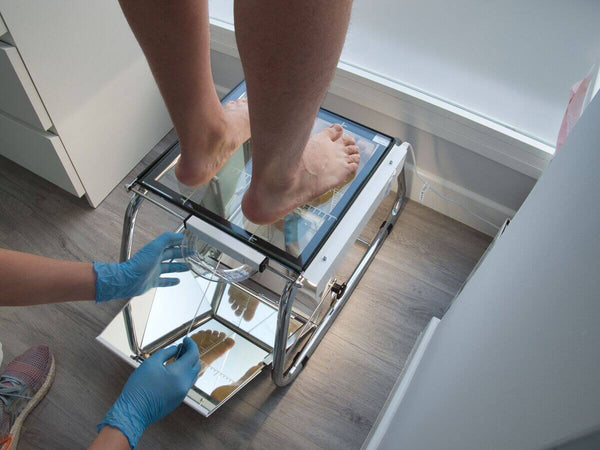
If you think barefoot shoes could improve your quality of life, don't hesitate to consult with your doctor or foot health specialist about their potential benefits for you.
FAQs
What Are Flat Feet and What Causes Them?
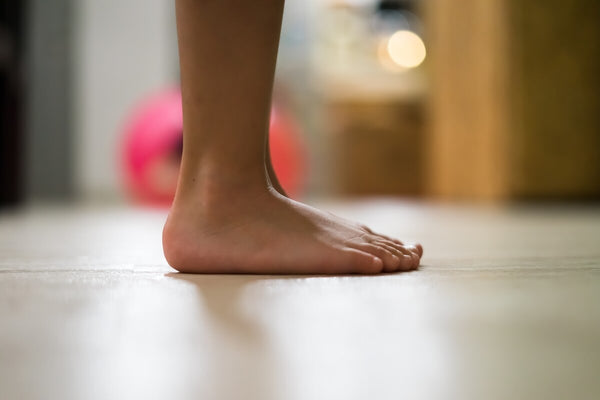
There's a lot of confusion around foot health in general and more fear surrounding the topic of flat feet than there needs to be. Flat feet are often just a variation of normal. Foot arches fall along a spectrum of flat to highly arched and there's a wide range of perfectly healthy feet within this spectrum.
The main cause for concern is when flat feet cause pain or are linked to other foot problems. This means barefoot shoes are perfectly fine for flat feet in most instances, but not always.
The term flat feet refers specifically to the arch along the inner part of the foot known anatomically as the medial longitudinal arch. It extends from the heel to the base of the big toe knuckle. For people with flat feet, this portion of the foot may be completely flat on the ground, or it may be just slightly lifted.
This arch is made up of the tarsal and metatarsal bones, but it's supported by ligaments, tendons, and small muscles in the sole of the foot. This means that arch shape is partially determined genetically by the shape of the bones, but it can also be impacted by the condition of the supporting tissues.
All people begin life with flat feet. Babies and young children have very little lift in their arches until around the age of 6 when they begin to develop (3). For some children, arches never develop and they have flat feet their whole lives. Other people develop average arches but find their feet flattening later in life for various reasons. This is known as a "collapsed arch".
Many scenarios can lead to collapsed feet later in life, but some of the most common factors are weight gain, pregnancy, diabetes, acute injury, arthritis, wear and tear, and age (4).
What Are The Potential Reasons For Flat Feet?
- Natural foot structure
- Weight gain
- Pregnancy
- Weak arches
- Tendon injury
- Broken bones
- Arthritis
- Diabetes
The reason someone has flat feet often determines if it needs addressing or not. Usually, people who've had flat feet since childhood due to genetics have perfectly well-functioning feet with no pain. They're likely to find barefoot shoes comfortable and have no issues with transitioning from regular shoes.
When flat feet occur because of illness or injury, it's more of a reason to proceed with caution. That being said, barefoot shoes can still potentially be a great option for improving foot health and overall well-being.
Are there some excercies for flat feet?
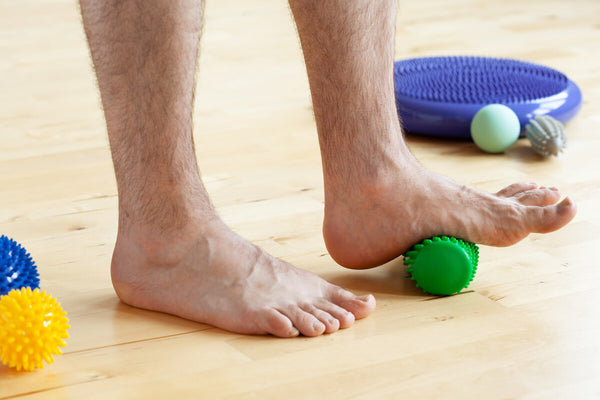
Exercises may help some people with flat feet, especially when the feet are flexible and not painful. The goal is not necessarily to create a perfect arch, but to improve foot strength, control, balance, and comfort.
Short foot exercise: Keep the heel and toes on the floor, then gently draw the ball of the foot toward the heel to activate the arch. Avoid curling the toes.
Heel raises: Slowly rise onto the balls of your feet, then lower back down with control. This helps strengthen the calves and foot muscles.
Toe yoga: Try lifting the big toe while keeping the smaller toes down, then switch. This improves toe control and foot coordination.
Single-leg balance: Stand on one foot and keep the foot active without gripping the floor with your toes.
Calf stretching: Stretch the calves and Achilles tendon, especially if the back of the leg feels tight.
Start gently and increase gradually. Mild muscle fatigue can be normal, but sharp pain, increasing arch pain, heel pain, Achilles pain, or knee pain is a sign to stop and seek professional advice.
Article Sources
- Salvador Pita-Fernandez. (2017). Flat Foot in a Random Population and its Impact on Quality of Life and Functionality. Journal of Clinical and Diagnostic Research.
- My FootDr. (2017). The inaugural 2017 Healthy Foot Survey.
- Steffen Müller. (2012). Static and dynamic foot characteristics in children aged 1–13 years: A cross-sectional study. Gait & Posture.
- Hamed Malakoutikhah. (2022). The contribution of the ligaments in progressive collapsing foot deformity: A comprehensive computational study. Orthopaedic Research.
- Deirdre Whitford. (2007). A Randomized Controlled Trial of Two Types of In-Shoe Orthoses in Children with Flexible Excess Pronation of the Feet. Foot & Ankle International.
- Nicholas B. Holowka. (2018). Foot strength and stiffness are related to footwear use in a comparison of minimally- vs. conventionally-shod populations. Nature.


